
A 67 degree silicone elbow coupler (67°-os szilikon könyök idom) is a flexible hose connector that gives a near-90° but gentler direction change for intake, intercooler/boost or coolant routing, while helping accommodate engine movement and thermal expansion.
Select by inner diameter (inch/mm), leg length, wall thickness and reinforcement so the joint seals cleanly and clamps sit correctly. Verify exact dimensions and specifications on the product card; in-stock items dispatch fast within the EU.
Filter by size and geometry, then confirm the product card details before choosing matching clamps.
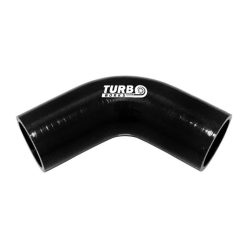
Net price: 10 €
Net price: 10 €
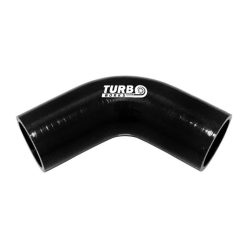
Net price: 18 €
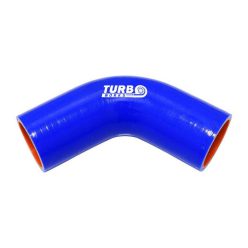
Net price: 9 €
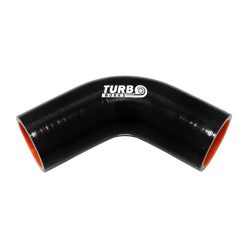
Net price: 10 €
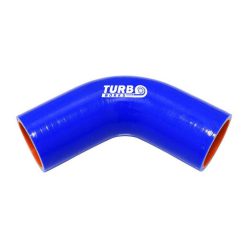
Net price: 11 €
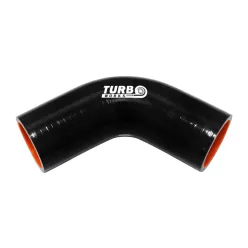
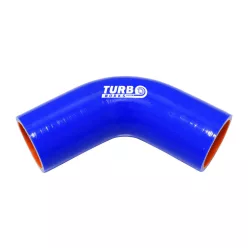
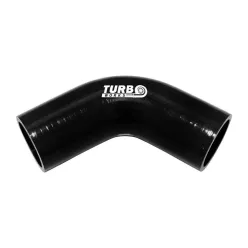
Net price: 21 €
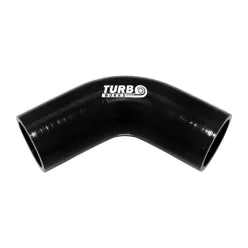
Net price: 4 €
67 Degree Silicone Elbow Couplers – When this angle makes sense
A 67° silicone elbow connector (67 degree silicone elbow coupler) is a useful middle ground when 45° is not enough but a 90° bend is too abrupt or does not package well. A compliant coupler can help absorb vibration and thermal movement, supporting sealing integrity and helping protect pipe ends in charge-air, intake or selected coolant connections.
Technical background and routing considerations
The 67° angle often suits pipework that meets “almost square” but not perfectly, or where a 90° elbow would push the next section into a fan shroud, heat shield or body panel. Depending on the build, elbows may use different layer constructions and reinforcements to support shape retention and distribute clamp load; exact details vary by product card. Best results come from routing that avoids constant twist or side-load through the joint.
- Dimensions that matter: inner diameter, leg length, wall thickness and bend radius define clamp area and clearance.
- Pipe ends: beaded/rolled ends can help reduce the chance of movement under load when paired with correct clamp placement.
- Use-case check: medium and temperature expectations differ between systems—confirm suitability on the product card.
How to choose the right one
Measure your hard pipe outside diameter and match it to the coupler inner diameter (inch sizes are common; mm equivalents help). Then validate leg length: you want enough straight engagement for the clamp, and space for a bead/rolled end if present. Finally, test-fit to ensure the 67° bend sits naturally—no torsion and no forcing the pipes into alignment.
- Quick checks: even seating, no bunching, and stable clamp landing area on both legs.
- Diameter changes: if you need two different sizes, a reducer elbow is usually the cleaner option.
- Confirm on the product card: ID, leg length, wall thickness and any reinforcement notes.
If you need other angles or reducer geometries, explore the Silicone Elbows and Reducers parent category.
Installation and failure-prevention tips
Dry-fit first and set the pipework so the elbow is not installed in torsion. Where possible, use beaded pipe ends and place the clamp just behind the bead. Avoid oily residues and do not rely on petroleum-based sprays on silicone, as they can reduce friction and compromise retention.
degrease using a manufacturer-recommended cleaner, then allow to dry completely before applying load/boost
The most common failure mode is a joint that is side-loaded or clamped on an edge/bead incorrectly, allowing the elbow to creep or pop off under load; symptoms include a light whistle, an oily ring at the joint, or unstable boost/air leaks. Prevent it by correcting alignment, using beaded ends where possible, positioning the clamp behind the bead, and re-checking clamp position after a short heat cycle.
PRO TIP: If packaging allows, leave a small amount of “compliance” in mounting so engine movement is shared by the system, rather than twisting the elbow itself.
FAQ
When should I pick a 67° elbow over 45° or 90°?
Choose 67° when 45° does not redirect enough, but 90° is too tight, too abrupt, or creates packaging conflicts that would force the joint into twist or side-load.
How do I confirm the diameter (inch/mm)?
Measure pipe OD and match it to coupler ID, then test-fit to confirm even seating without bunching. Always verify the exact ID on the product card.
Why does leg length matter?
You need enough straight engagement for stable clamping; too short a leg can push the clamp into a poor position, which can hurt sealing and retention.
Which clamp type should I use?
Depending on the setup, worm-drive, T-bolt or constant-tension clamps can work; the key is correct diameter range, smooth band edges, and positioning relative to a pipe bead.
Can these be used on coolant joints?
Often yes, but always follow the product card notes for medium compatibility and construction, especially where heat cycling is significant.
